pickleball coaching erapickleball.com: Custom Plans for Growth
What follows is a window into how coaching at Era Pickleball translates into real, measurable growth for players at every level. It isn’t about chasing the latest trend or chasing a generic metric. It’s about building a durable, adaptable path that respects a player’s starting point, accelerates progress, and remains honest about the limits of technique, fitness, and time. At Era Pickleball, the guiding principle is simple: coaching should meet you where you are and move you toward where you want to be.
A few years ago I watched a weekend group session turn a hesitant four player into a cohesive unit by the end of the second day. The transformation wasn’t dramatic in the sense of a single flawless shot, but you could see it in the rhythm, in the way players anticipated the next rally, in the way they spoke about the game with authority rather than nerves. It wasn’t magic. It was a carefully designed plan that respected individual needs while leveraging shared goals. That is the backbone of the custom coaching work at Era Pickleball.
The landscape of pickleball coaching has shifted a lot in the last few seasons. The sport has grown from a casual, backyard pastime into a serious athletic pursuit for many adults and a developing pipeline for young athletes. That evolution brings both opportunity and risk. On the opportunity side, players can access more structured coaching, better facility options, and clearer pathways to improvement. On the risk side, there is a danger of generic, one-size-fits-all programs that fail to respect individual biomechanics, injury history, or day-to-day performance variability. Era Pickleball’s approach to custom plans is designed to avoid that trap. It aims to blend data, observation, and personalized intention into a coherent growth arc.
In this article, you’ll find an intimate look at what a custom plan can look like in practice, how a typical coaching engagement unfolds, and the tradeoffs that come with any long-term athletic development program. You’ll also encounter practical details—how to prepare for a first session, what a 12-week window tends to deliver, and where to expect uncertainty. The aim is to give you a clear sense of what to expect when you commit to era pickleball classes or era pickleball training, and how those commitments can translate into tangible improvement on the court.
The core idea behind a custom plan is simple but powerful: performance grows when your practice aligns with your current strengths, your weakest links, and the specific demands of your game. The most successful plans are not just a sequence of drills; they are living documents that flex with training load, match schedules, and life outside the court. That requires honesty about your starting point and a willingness to adjust as new information comes in. It also requires a coaching partner who can translate data into behavior—who can translate a charted improvement in serve depth into a changed mental approach on match day.
If you’re exploring pickleball coaching with Era Pickleball, you’ll encounter three decisive themes that structure every custom plan: clarity, progression, and accountability. Clarity means you understand not just what you’re doing but why you’re doing it. Progression ensures you’re moving in meaningful steps rather than chasing random gains. Accountability stitches the process together, tying practice habits to outcomes, and keeps you honest about what actually happened in a session or a tournament.
What makes a plan “custom” is not merely choosing a few targets from a checklist. It’s something subtler. It’s the art of mapping your unique context onto the sport’s universal principles. Your age, your body, your past injuries, your available time, and your competition schedule all influence the shape of the plan. A customization in Era Pickleball coaching might look like altering the emphasis from aggressive net play to controlled baseline exchanges for someone with a long, athletic but injury-prone backhand, or it might mean prioritizing footwork patterns that reduce drag and improve transition speed for a player with a late-certified serve and a tendency to drift during rallies. The aim is a plan that feels natural to you, not a plan you have to drag yourself through.
The actual process of building a custom plan begins with a candid intake. The coaching team wants to meet you where you are. They listen to your goals, watch a few drills, and track a handful of matches. They also ask about life outside the court, because sleep, nutrition, and stress all color your performance. From there, a tailored blueprint starts to take shape: a sequence of weeks, an emphasis on specific shots, a suggested schedule, and a set of metrics to measure progress. The plan remains flexible. It is updated after a few weeks, when new information about your recovery, your confidence, or your competition calendar arrives.
Era Pickleball’s coaching ecosystem thrives because it provides structure without rigidity. A well-designed plan gives you a sense of forward momentum, but it doesn’t pretend that progress is linear. If you have a month with a string of disappointing matches, the plan recalibrates rather than presses you to “be better” on a fixed timetable. The emphasis shifts to what you can control: your preparation, your shot selection, your ability to execute under pressure, and your capacity to recover after tough days.
A crucial element of the custom plan is the way it translates coaching insight into playable routines. Drills, drills, and more drills can become a form of mental fatigue if not grounded in purpose. The Era Pickleball approach centers drills around the game realities you face most often. For many players, that means simulating live-ball exchanges, recapturing pace, and building decision-making under pressure. For others, it means a laser focus on serve return choices, court positioning in doubles, or the subtle timing of the drive volley at the kitchen line. Each contingency is a thread in the larger tapestry of your week, threaded to your tournament schedule and backed by data from practice logs and match tapes.
The evolution from initial assessment to the finished plan is not a sterile process. It is a conversation that unfolds over weeks, with the coach offering feedback that is concrete and specific. A typical session might begin with a quick scan of your current physical state, followed by a review of your recent practice notes. The coach then flags a few concrete moves to try, often with a mental cue that sticks. By the end of the session there is a sense of ownership, a feeling that you understand not just what to do but why it matters. The best coaching relationships at Era Pickleball feel like a collaboration between two practitioners who share a mutual respect for the sport and for the player.
Alongside the technique and tactical work, a strong custom plan accounts for strategic growth. Pickleball, when played at a high level, is as much about decision making as it is about skills. Era Pickleball coaching leans into this reality by introducing scenario-based practice. Think of a few key moments that routinely decide matches: the pressure point on a service return, a critical shot when the ball is near the baseline, or the choice to escalate to the drive volley versus the steady poach. The plan seeds these moments into practice, gradually increasing complexity as your comfort grows. You’re not just learning a shot; you’re learning to recognize cues that tell you what to do next in the flow of a rally, and you’re building the mental templates that let you act decisively under stress.
The business side of Era Pickleball is clear and grounded. It is not about flashy marketing or a grab bag of generic workouts. It is about a coherent, professional service that respects your time and your goals. For many players, a critical decision is whether to commit to a longer plan or to try a shorter sprint to a specific target, such as improving net confidence or reducing unforced errors in deep corners. The coaching team at Era Pickleball offers transparent guidance about what a given commitment can realistically deliver, including potential plateau points and how they tend to happen. This honesty matters. It helps you budget energy, time, and even money, so you can plan a season with confidence rather than chasing unproven magic.
One of the defining advantages of Era Pickleball is the degree of adaptability embedded in the custom plans. The sport evolves quickly, and so do players. A plan that worked beautifully in September may need refinements in January when you return from holidays or hit a plateau in a different competitive circuit. The best coaches stay beside you, updating drills, revising progressions, and recalibrating goals as needed. They expect setbacks not as failures but as information to guide the next adaptation. In practice, this means you might shift a portion of your weekly workload to court movement and stamina during a busy tournament season, then pivot to technique and shot-making during a quieter period for recovery and skill consolidation. Your plan becomes a living document rather than a fixed itinerary.
To give you a concrete sense of what a growth arc can look like inside Era Pickleball coaching, consider a player who begins with a clear desire to improve at the net without sacrificing baseline consistency. The initial weeks might emphasize footwork patterns, split-step timing, and a fearless but controlled approach to the kitchen line. You’ll see a noticeable difference in your net confidence after two to three weeks, with a marked change in rally outcomes when your opponent forces you to move quickly. Then the plan shifts toward adding variety to your net play: different volley trajectories, deceptive soft touch, and the ability to close out points aggressively when the window opens. After 8 to 12 weeks, you’re not simply hitting better volleys; you’re orchestrating points with purposeful choices, reading the court’s geometry, and impinging on your opponent’s rhythm with a reliable cadence.
A custom plan also requires honest attention to recovery. The most effective players know that improvement does not come from grinding through pain or fatigue. At Era Pickleball, there is a practical emphasis on sleep quality, nutrition that supports training load, and smart rest days that preserve skill quality across sessions. Coaches frame recovery as an investment rather than as a casualty of a busy schedule. They will discuss the signs of overtraining, joint health considerations, and how to spread practice intensity across a week so that performance stays high without wearing you down. This is part of the plan because sustainable growth is the real goal.
If you are deciding whether to engage with era pickleball classes or era pickleball training, the answer is not simply yes or no. It is about alignment with your life, your sport ambitions, and your readiness to commit to a process that blends technique, strategy, and mental conditioning. The team at Era Pickleball can tailor a path that respects your current balance of work, family, and play, while still pushing you toward meaningful gains. There is no shortcut that feels lasting. What works is a thoughtful sequence that honors your unique timeline and your competitive appetite.
For players who juggle multiple sports, or for those who may be returning from injury, the custom plan becomes a bridge rather than a barrier. The Era Pickleball approach acknowledges the reality that your body may require more time to rebuild certain movement patterns. The coaching staff does not promise instant solutions. Instead, they propose a measured plan that rebuilds confidence, reintroduces movement patterns safely, and reintroduces pressure in a controlled way so you can regain your sense of composure during matches. This is one of the reasons why the custom path tends to deliver durable improvements rather than quick booms that fade after a few weeks.
The following two lists summarize the practical aspects you can expect when you embark on a custom coaching journey with Era Pickleball. They are not checklists to rush through; they are anchors to help you visualize the process and to help you set expectations with your coach.
What’s included in a custom plan
- A detailed initial assessment that covers movement, shot quality, and match decision making.
- A week-by-week progression that integrates skill work, drills, and live play scenarios.
- Clear performance metrics tied to your chosen goals, so you know what counts as progress.
- A strategy component that situates your development within the realities of your typical tournaments.
- Regular plan revisions based on practice logs, video review, and tournament outcomes.
How to start a custom plan
- Book a discovery session to discuss goals, constraints, and prior experience.
- Bring recent match footage or practice clips to help the coach see patterns you may not articulate verbally.
- Prepare a rough calendar showing your upcoming tournaments and travel so the plan can align with scheduling.
- Expect a candid assessment that flags both strengths to leverage and gaps to close.
- Agree on a concrete time horizon, typically 8 to 12 weeks, with milestones along the way.
The two lists above are designed to be practical anchors. They also illustrate the way Era Pickleball translates a coaching philosophy into tangible actions. The coaching team uses these structures not to box players into a formula, but to provide a reliable scaffolding that protects you from missteps best pickleball courts while still allowing room for creative growth. The real value emerges when you see the plan in your calendar as a sequence of meaningful commitments, not as a vague aspiration you hope to reach someday.
As you move through a custom plan, you’ll likely encounter moments of friction. There may be days when your serve feels flat, or when your backhand fails to connect with your intention. These moments are not signals to abandon the plan; they are signals to adjust. A good coach helps you understand whether the problem lies in technique, in timing, or in energy levels. Sometimes the best move is to decrease volume temporarily and focus on a single technical adjustment. Sometimes you might benefit from rebalancing training emphasis toward movement efficiency or mental skills. The point is to stay curious, stay patient, and keep returning to the overarching objective: to play smarter, not just harder.
In the context of pickleball coaching, the idea of growth is never purely about adding new shots. It’s about making the few shots you already have more reliable, more purposeful, and more context aware. It’s about understanding when to push and when to conserve energy. It’s about building a court sense that enables you to predict your opponent’s options and shape the rally accordingly. Era Pickleball emphasizes the interplay between individual technique and shared court dynamics. In doubles play, for example, your plan may include communication protocols, coordinated movement patterns, and precise serving strategies designed to exploit a specific opponent’s tendencies. Even in singles, you’ll see a focus on the mental discipline necessary to maintain a plan when a rally stretches long or when a mistake invites frustration.
Coaching at Era Pickleball is not a solitary pursuit. It benefits from community and shared learning. You might find yourself watching a peer’s development arc and thinking about a parallel path in your own game. The trainers encourage this cross-pollination because it often leads to practical insights that you can apply immediately. Seeing how someone else handles a tricky volley, or how they adjust shot selection under pressure, can serve as a catalyst for your own decisions during a match. The best sessions blend individual work with a touch of collective wisdom, creating a learning environment that remains focused while still feeling human.
Beyond the on-court work, the Era Pickleball coaching ecosystem includes attention to equipment, court setup, and tactical planning for tournaments. A well-tuned plan considers not only how you move but where you stand on the court at different points in a rally. It also takes into account how you recover between points and how you approach the bench during a match. These seemingly small decisions accumulate to a meaningful edge over time. A custom plan can address these subtleties, ensuring you carry a coherent approach from warm-up through the last point of a tournament, not just during a single practice session.
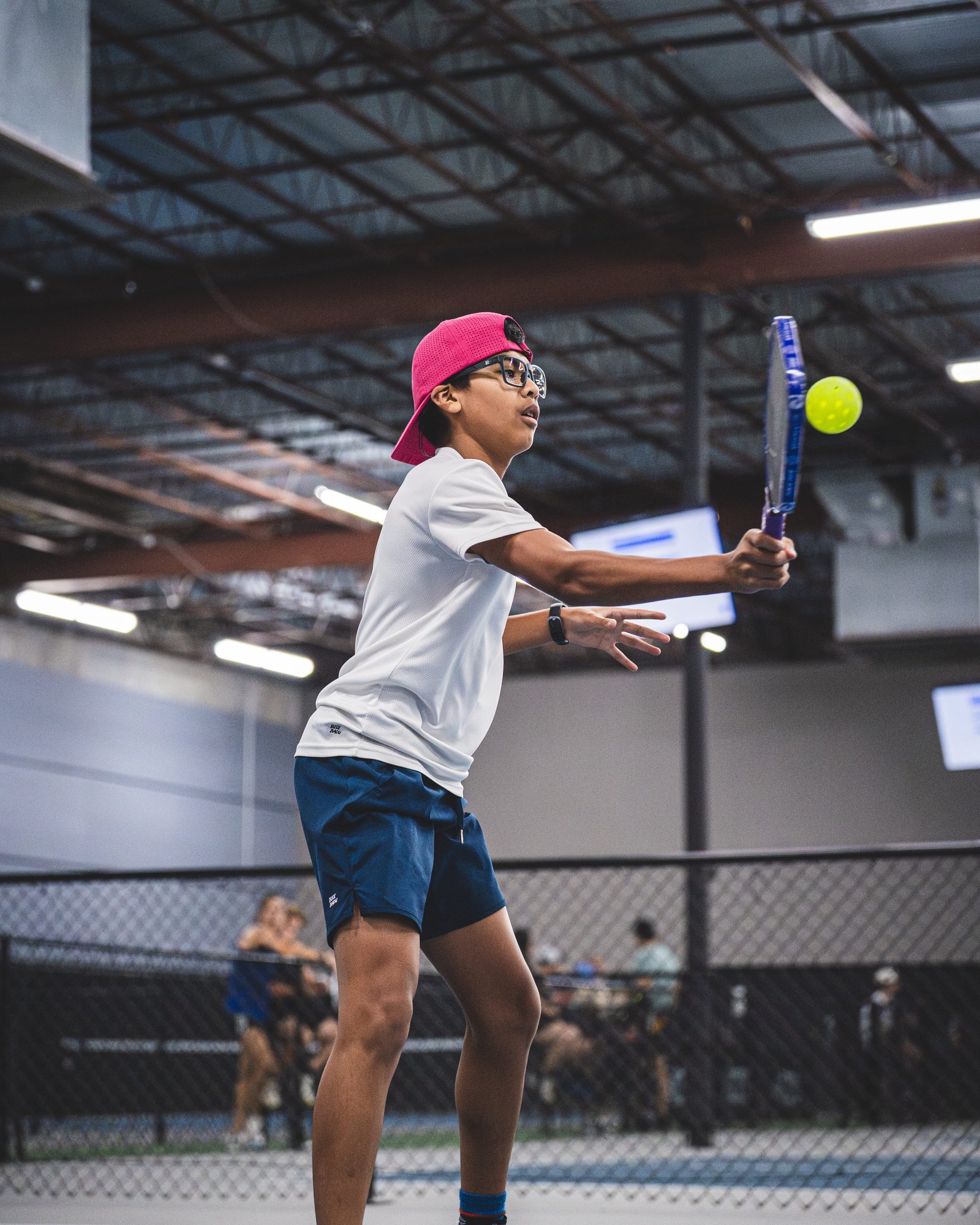
In practice, you’ll see the impact of a custom plan in several areas. You’ll notice more consistent ball placement under pressure, improved conversion on key transitions, and a calmer approach to closing points at the net. You’ll notice better footwork that reduces fatigue and a more economical use of energy across long rallies. You’ll also notice that your choices become more intentional and less reactive, which is often the most valuable change of all. The more you trust your plan, the more you can lean into your strengths while still protecting against your weaknesses.
The most meaningful stories you encounter in era pickleball coaching rarely hinge on a single triumph. They emerge when players begin to trust the process and stop chasing instantaneous outcomes. A mid-season coach might remind you that progress is a sequence, not a single event. A few weeks after an anxious start, you can see the pattern emerge: your decision making has become more stable, your shot selection has grown into a cohesive system, and your confidence is less dependent on the scoreline and more anchored in the quality of your practice and your readiness to perform.
If you are considering Era Pickleball pickleball classes or era pickleball training, you should expect a process that respects your individuality while holding you to a standard of accountability. The most effective coaches will set ambitious but realistic milestones. They will show you how to track progress in ways that feel tangible, whether through improved rally length, higher conversion rates on third shot drops, or a lower count of unforced errors in the most challenging matches. They will also be honest about the limits of the plan when life circumstances impose constraints or when you are asked to push through a plateau. In those moments, the value of a well-crafted custom plan becomes most evident: it provides a clear path forward even when the terrain looks uncertain.
For players who are curious about what era pickleball classes or era pickleball training can deliver, here is a practical framing. In the first four to six weeks, you can expect to establish a baseline, refine your grip and stance, and unlock a more reliable shot repertoire. You will begin to notice improved shot selection and the start of a more consistent rally. By weeks six to twelve, you’ll likely experience a shift toward more sophisticated decision making, better court sense, and a stronger mental game, especially in tight scorelines. After three months, you should be able to translate practice gains into competition results with a greater degree of predictability. This is the point where many players realize that the real return on a custom plan is not just better technique but stronger game intelligence and resilience.
The deeper you go into a custom plan, the more you realize how important it is to maintain a coachable mindset. You are not signing up for a fixed outcome; you are committing to a process that will adjust as you change and as the game evolves. Era Pickleball coaching practices are designed to honor that reality. They provide you with a professional framework to grow, while leaving room for your personal passions, regional play styles, and your evolving perception of what it means to improve at pickleball.
A final note on the practicalities of growth: the strongest outcomes come from consistency. A custom plan is not a sprint but a careful cadence of practice, feedback, and adjustment. It requires scheduling discipline, a willingness to share honest feedback with your coach, and a readiness to learn from both success and setback. When you show up with that attitude, you are likely to find that your gains compound. The more you invest in the process, the more you discover that your improvement is not simply about adding new shots or faster footwork. It is about refining your approach to the game as a whole—your preparation, your court sense, and your mental response when the pressure rises.
If you are ready to explore custom growth at Era Pickleball, begin by setting a clear intention. Think about what success looks like for you in the next season. Is it more consistent serve returns under pressure? A higher serve-to-volley ratio in doubles? A new level of confidence in late-game decision making? You can articulate these goals to your coach, who will translate them into a practical plan that respects your time, your body, and your competition schedule. The aim is not to chase a vague improvement, but to deliver a concrete path forward with measurable milestones and a clear sense of how practice translates into matches.
Era Pickleball’s approach to coaching is not about assembling a blueprint and applying it to every player. It is about crafting a blueprint that fits you perfectly, and then iterating on it with real-world feedback. The environment is supportive but rigorous, practical but not punitive. The focus remains on your growth trajectory, your enjoyment of the sport, and your ability to sustain progress across seasons. When you begin with Era Pickleball pickleball classes or era pickleball training, you are entering a partnership that treats improvement as a collaborative journey rather than a solo sprint. The results, over time, speak for themselves: sharper footwork, smarter shot selection, better in-match decision making, and a more enduring love for the game.
If you would like to read more about the perspectives, experiences, and outcomes that players have experienced through Era Pickleball coaching, you can explore the site and testimonials that accompany the program. You will find stories of players reinventing their game in their 40s, 50s, and beyond, of doubles teams refining their synergy and their serve strategies, and of newcomers finding a clear path into competition with confidence. The common thread in these narratives is the same: a commitment to a plan that respects the complexity of the sport while staying grounded in practical realities.
In the end, the value of a custom plan at Era Pickleball lies in its ability to align the sport’s demands with your personal journey. It’s not about pretending that improvement is easy. It’s about building a reciprocal relationship where you bring your aspirations to the court and the coaching team brings clarity, structure, and accountability to your effort. When those elements converge, you don’t just play better pickleball. You understand better how you can grow as an athlete, a teammate, and a competitor.
If this resonates with you, take the next step. Reach out to Era Pickleball and start a conversation about your goals, your schedule, and your current experience level. A well-timed custom plan can turn a season of scattered practices into a coherent arc of skill development, strategic thinking, and on-court confidence. The journey may be long, but the progress is real, and the payoff is the ability to bring your best game to every rally, every match, and every competition you choose to enter. In that sense, growth is not merely a destination, but a way of playing the game.